Μνημείο
Φωτογραφίες
Sotiris Skantzikas, the only Greek Great Escaper
Sotiris Skantzikas: Prisoner “No. 1822” of Stalag Luft III
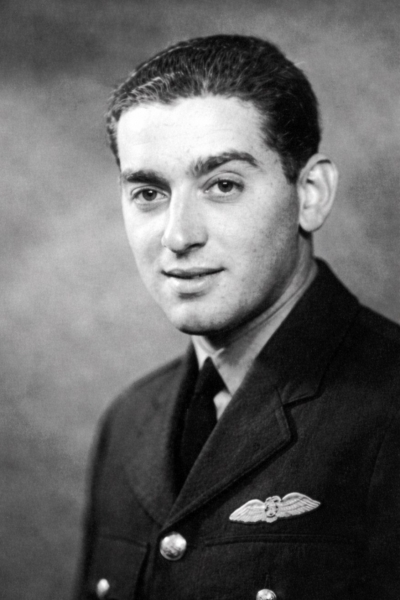
Some may remember the unforgettable Steve McQueen in the 1963 film The Great Escape, based on real events, racing toward freedom on a motorcycle from the German prisoner-of-war camp for airmen, Stalag Luft III. Few, however, know that among the prisoners who escaped from that camp near the town of Żagań in western Poland in March 1944 was also a Greek: Flight Lieutenant Sotiris Skantzikas of the then Royal Hellenic Air Force.
Shortly after 10 p.m. on March 24, 1944, two hundred Allied airmen held by the Germans attempted to escape through a tunnel 102 meters long and just 60 centimeters wide, which they had been digging with knives and forks for fifteen months.
A total of 76 Allied airmen crawled their way to the tunnel’s exit, among them Sotiris Skantzikas.
Although all seventy-six initially escaped, only three managed to reach Britain safely—one Dutchman and two Norwegians. The rest were recaptured. Fifty were executed in cold blood by the Gestapo, and their bodies were cremated. Among them was Sotiris Skantzikas, a Flight Lieutenant of the 336th Hellenic Fighter Squadron, which operated from the Middle East.
“The sheer audacity of the captive airmen, their ambition, and their gradual escape in groups made the breakout from Stalag Luft III so unique,” emphasizes Steve Darlow, author, publisher, and historical documentary consultant.
“All this ingenuity within the camp’s confined limits remained hidden from the guards, and although one of the three tunnels was discovered, it did not deter the airmen from carrying out their planned mass escape, focusing on the third tunnel,” Darlow adds. “It is truly a fascinating story of human effort. We must also remember the tragedy of the escape—the fifty who were murdered.”
From early April 1943, with great caution, three tunnels began to be dug using everyday camp items. In total, 2,279 knives, forks, and spoons were used, and even bed boards served as supports. More than 1,500 metal milk containers supplied by the Red Cross were used to construct ventilation systems. The excavated soil was carefully carried in the prisoners’ trouser pockets and discreetly scattered in an area disguised as a flower garden. To avoid suspicion, the tunnels were given the nicknames “Tom,” “Dick,” and “Harry.”
Two hundred men were selected by priority to escape first through the “Harry” tunnel, from an initial group of six hundred who had been involved. However, as the 76th man emerged and ran toward the forest, he was spotted by a German patrol. Those waiting in hut “104,” realizing something had gone wrong, hastily tried to destroy evidence—burning maps, forged identity papers, and frantically covering the tunnel entrance.
A Short but Adventurous Life
Flight Lieutenant Sotiris Skantzikas was not the only Greek imprisoned at Stalag Luft III. Alongside him was Squadron Leader Spiros Diamantopoulos, commander of the 336 Squadron. Both had been captured after separate air raids over occupied Crete, when their single-engine fighter aircraft were hit by German anti-aircraft fire. Two other Greek airmen, Zacharias Spendos and Panagiotis Tsirikoglou, were also prisoners.
On April 9, 1941, when German forces broke through the Metaxas Line on the Greek-Bulgarian border, hundreds of German fighters with black swastikas swept across the Greek countryside and airfields, destroying what remained of the Greek Air Force. Only five Avro Anson aircraft of the 13th Naval Cooperation Squadron and three training planes managed to escape via Crete to Egypt and Palestine.
There, a handful of Greek airmen rebuilt the Air Force into purely Greek squadrons under the Royal Air Force (RAF). These determined men soon raised the Greek flag in operations “flying in foreign skies,” while the Nazi swastika defiled the Acropolis.
Among those who fled to Palestine were cadets of the 10th class of the Air Force Academy, including first-year cadet Sotiris Skantzikas.
“We are living on borrowed time—we should all be dead! The only reason God gave us this extension is to make the Hun’s life hell,” said Roger Bushell, the RAF squadron leader who masterminded the escape.
By February 1943 in North Africa, Skantzikas was already a pilot officer in the Royal Hellenic Air Force, assigned to the newly formed 336 Fighter Squadron after training in Rhodesia and Sudan. A photograph shows him standing with fellow pilots in front of a Hurricane aircraft, wearing his flight life jacket. Four months later, he would be a prisoner of the Germans.
Years later, he described:
“After my capture, I was taken in January 1944 to Stalag Luft III. Upon arrival, I was informed about the escape tunnel the prisoners were building, mostly RAF personnel. Within days, I joined the work. The construction of the tunnel was truly an extraordinary feat—an incredible achievement. It was managed by a committee with specialized knowledge, coordinating various teams. Everyone worked with method, organization, secrecy, and faith, as was typical of RAF men.”
“Tunnel”: The Magic Word for Freedom
On July 23, 1943, during Operation “Thesis,” Greek pilots, including Skantzikas, flew from North Africa to strike German targets in Crete. The mission aimed both to avenge atrocities committed by the Nazis and to mislead German command into expecting a large Allied invasion.
During the raid, Skantzikas’ aircraft was hit. He managed a crash landing near Heraklion, unaware that another Greek pilot, Lefteris Athanasakis, had also been shot down and killed.
Captured, Skantzikas was eventually taken to Stalag Luft III.
Twelve Dramatic Hours
On the cold night of March 24, 1944, Skantzikas emerged from the tunnel and fled with a small group, including RAF pilot Jimmy James.
After walking roughly 16 kilometers, they reached a rural station and boarded a train heading south. Their plan was to reach Czechoslovakia. However, at a station in Hirschberg (now Jelenia Góra), a policeman checked their documents and arrested them.
Eight members of the group, including Skantzikas, were captured just twelve hours after their escape.
After several days, four names were called—including Skantzikas. Believing they were being returned to the camp, they instead were taken to be executed.
On March 30, 1944, Sotiris Skantzikas was shot in the back in a wooded area near the town of his capture. He was only 23 years old.
Among the fifty executed was also Roger Bushell, the mastermind of the escape.
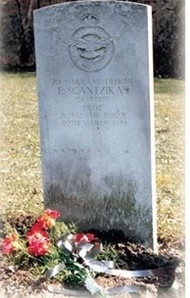
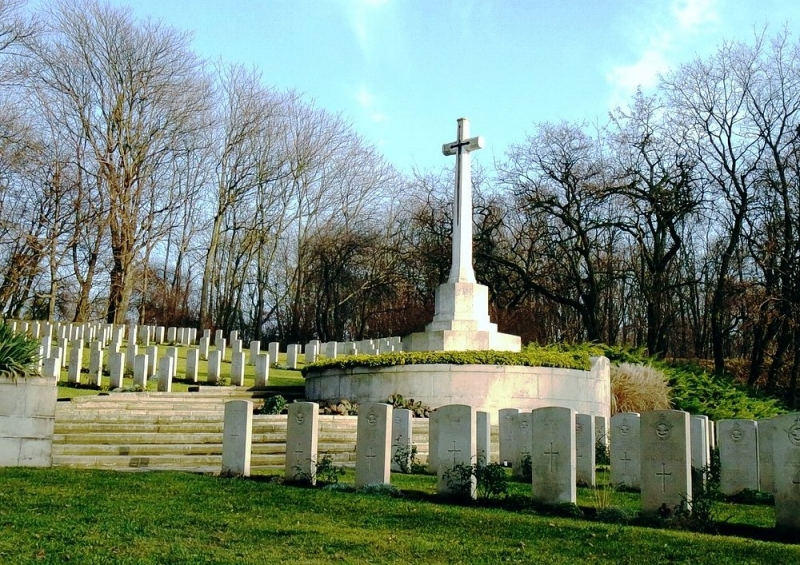
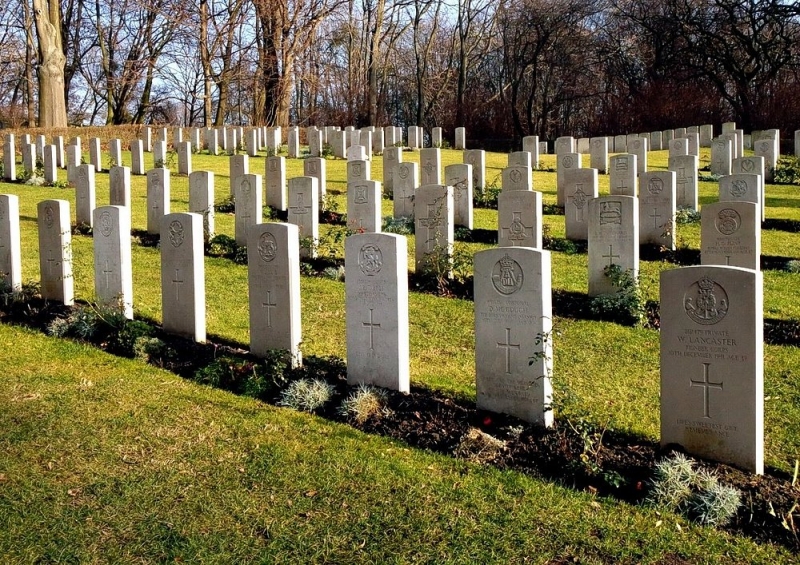
Skantzikas’ ashes are kept at the military cemetery in Poznań, Poland.
Aftermath and Recognition
In 1947, during war crimes trials in Hamburg, fourteen former Gestapo members involved in the murders were sentenced to death, and two to life imprisonment. However, the man responsible for Skantzikas’ execution was never brought to justice.
For many years, Skantzikas’ name was absent from a memorial to fallen Laconian airmen in his hometown of Gytheio, because he had not died in an विमान crash. After protests by fellow airman Konstantinos Chatzilakos, his name was finally added—honoring a man who fulfilled his duty and brought pride to Greece and its Air Force.
https://www.pasoipa.org.gr/lefkoma/pilot_details/?id=223#